Stefan Molyneux explores several questions sent in by the community at freedomain.locals.com. He starts with the value of matchmaking, whether in romantic or professional settings. He stresses the need to introduce people thoughtfully when they might truly benefit from knowing each other. Drawing from his own experiences, he encourages honest and sincere efforts to build those connections, noting that being a careful matchmaker often produces worthwhile results.
He then turns to the topic of vaccines. He recounts his personal history with them and voices his ongoing doubts about their safety, particularly in the wake of the COVID-19 rollout. He examines how public health emergencies are framed in ways that stir fear and encourage compliance. He points out the contradictions between what society demands and what individuals are expected to accept, arguing that escalating perceptions of danger can override evidence and push people toward policies that seem increasingly detached from actual data.
Next, he reflects on what makes someone a good listener. From his own interactions, he explains that real listening grows out of genuine curiosity and a wish to understand the other person deeply. He contrasts this with the more common habit of listening only long enough to prepare one's own reply. He suggests that authentic communication comes when the focus stays on the speaker's perspective rather than shifting back to self-promotion.
He also responds to questions about universally preferable behavior and the challenges it raises in moral philosophy. He defends the concept against claims that it collapses into subjectivity. He notes how moral actions are shaped not only by individual choice but also by the environment and expectations created by those around us, especially within families. While he maintains that people should aim for principled lives, he acknowledges the powerful role that upbringing and social structures play in forming moral habits.
Finally, he considers the links between love, virtue, and free will. He describes how familial love and peaceful approaches to parenting can help develop a conscience and a sense of morality. He works to connect the psychological effects of love on character formation with the deeper philosophical questions of free will, offering a picture of how individuals can pursue moral consistency in their personal relationships and in society at large.
Across these topics, he ties the threads together and encourages listeners to examine their own beliefs and actions against the backdrop of prevailing social pressures, and to keep seeking truth even when fear and manipulation are at work.
0:00:00 - Questions from Subscribers
0:12:25 - The Vaccine Dilemma
0:19:00 - The Art of Listening
0:26:16 - Understanding UPB and Morality
0:40:15 - Free Will and Parenting
0:49:04 - Religion and Moral Preference
0:55:29 - Closing Thoughts and Donations
[0:00:00] Hey everybody, it's Stefan Molyneux from Freedomain. Hope you're doing well.
[0:00:03] I did ask some donors for questions at the freedomain.locals.com platform. And I've got some great questions. Let's run through them here. And you really should join us. A great community at freedomain.locals.com. All right. How would you go about making introductions between two individuals that you believe would both massively benefit from knowing one another, whether in a business, romantic, or other scenario? Yeah, it's a good thing to do. Putting people together who will work well together is a really, really great thing to do. And I appreciate that's a very positive thing.
[0:00:40] So it depends how serious and deep you intend or hope for the relationship to be. If it's hopefully a lifelong romantic relationship, then what I would do is talk up the other person to each other, right? So if it's Bob and Jane, talk up Bob to Jane, talk up Jane to Bob. Tell them how you think they'll fit together and that you have high hopes for compatibility and so on. And just be honest about it and then see if it works. It's the same thing in the business world. Don't be afraid to be an honest matchmaker. You know, I've had people who've been introduced to me, oh, this person would be very helpful to your business, you'd be helpful to theirs, and so on, and there's nothing wrong with being a matchmaker. Just be direct and be honest.
[0:01:28] Hey, Stef, maybe a bit of a personal question, but I would appreciate hearing what your thoughts are on vaccines now. Pre-COVID, I was convinced about vaccines being good, but now since witnessing the COVID jab and even just how terrible the batch controls were with contaminants, I haven't been able to bring myself to vaccinate my children. I don't trust vaccines made by companies who participated, but even if I could find some available that weren't, I read a book called Vax Unvaxed by Dale Bigtree and Robert Kennedy, and it made a compelling argument for vaccine injuries being much higher than reported. Also, there is so much corruption in the industry, yet with all of this, I still worry that it's not the right choice due to non-herd immunity related risks such as tetanus thanks if you take the time to touch on this yeah boy that's that's a horrible situation uh that's a a horrible, situation i received very few vaccines i still have the little scar on my arm from my a smallpox vaccine when i was a little kid uh i don't remember i i think when i oh when i traveled, to Morocco. I think I got a yellow fever vaccine, but I don't think I ever got the second one. So it's horrible. It's a horrible situation as a whole. And, you know, in a way.
[0:02:47] For people to manipulate or control you, what they need to do is escalate the danger to the point where it feels insane to not do what they say, right? So with, of course, with COVID it was like we can't have a society it's a deadly pandemic you're killing grandma and you're putting the immunocompromised or those who can't take vaccines at terrible risk and and oh my gosh and and you there's long COVID and you could be disabled and you could die and I mean they really did ramp up the.
[0:03:23] Danger signals and in general for human beings if you ramp up the danger signals enough people will comply This is one of the reasons why Ramping up the danger signals is so high. I mean if you remember of course in 2002 2003 the lead-up to the invasion of Iraq it was Saddam Hussein has weapons of mass destruction and Condoleezza Rice famous famously saying we don't want, the smoking gun to be in the form of a mushroom cloud that millions of Americans would be wiped out in a nuclear explosion set off by Saddam Hussein. Of course it was all nonsense and not true, but if you ramp up the escalation level to deadly threats then it is very easy to get the vast majority of people to comply. Most people are just operating on stimulus response. They don't have any particular thoughts or principles. And I found this to be as true of atheists as it is of Christians and vice versa. They're just operating on pleasure-pain principles. They don't have any foundational morals that they're willing to sacrifice for. And so.
[0:04:43] It is really a terrible situation. It's the same thing when Russia went into Ukraine. We could view that as a sort of small regional conflict. And, you know, there are more Russians in the Ukrainian area. And yeah, but then, of course, everything, as you know, everything is Hitler, Chamberlain and 1936 to 1939. That's the entire gamut of all international incidents are now, well, if we don't stop him now, this will be like Chamberlain failing to stop Hitler before World War II, which led to 40 to 60 million people killed, and the Holocaust, and all kinds of appalling and horrible things. Objectively, they were, of course. But when you reframe everything as maximum horrifying, terrible.
[0:05:35] Danger, then people will comply. And it's very hard to look at the data. Of course, we're not really trained to look at the data and the data is often not available as you remember it took a significant court case to overturn pharmaceutical companies reluctance to release data until what 75 years it passed or something crazy like that and even even if there is source data who knows how to analyze it and who can trust the people who are analyzing it it's a I mean I don't like to say that it's a weakness because it's hard to look at anything in human nature as a weakness given that we're sort of the alpha dominant species on the planet And so if you are Wayne Gretzky, who was, at least for a time, I don't know if it's still the case, he was the most successful athlete in human history, the most competent athlete, because the way you measure it is his achievements, which I guess is scoring goals in hockey, his achievements relative to the second. And he had the greatest span of being first relative to being second of any athlete in human history. And.
[0:06:42] If every danger is escalated to the point of absolute catastrophe, we end up being like ding, ding, ding, like these pinballs just bouncing around from terror to terror to terror to terror to terror to terror. And we don't have any real free will of our own. We don't have the ability to analyze things independently. We're not taught how to be skeptical. Of course, government schools wouldn't teach you how to be skeptical of power.
[0:07:10] And all people who claim to be moralists know how to do is threatened. I mean, it's appalling. Why should you study in school? Because you'll get detention, you'll get punished, you'll get lines, you'll get held back, it will be awful. That's why you should study, just threats. Why should you believe in this God or that God? of, you know, bribes and threats, heaven and hell. The disapproval of God who's always watching. It's just a, you'll go to hell and you won't be reunited with your loved ones after death and you'll spend eternity in torment. Oh my gosh, it's just endless. It's just endless. Parents say, well, why should you obey me? Why should you do what I say? Because I will spank you. I will hit you. I will put you in a timeout. I will take away your privileges. I will put you in your room. You will not get any supper. just punishment punishment punishment and all of that arises out of a helplessness which is solved by UPB, universally preferable behavior, which is the rational proof of secular ethics when you can prove things to people you don't need to threaten them and the less.
[0:08:23] People can prove things the more they will threaten and the degree of disproof is Measurable by the intensity of the threat, So for me when people come out with, Catastrophe scenarios, I just don't believe them at all. I just don't believe them at all. I.
[0:08:49] I mean, I said from the very beginning that the lockdowns were going to do far more damage than COVID-19 ever could. And unfortunately, I mean, I hate being right. I really, I hate being right. You know, if you tell your uncle he's going to die from smoking, it's not like you want to be right. You're telling him because you want to prevent the outcome. So in general, when I'm told that a catastrophe occurs and my skepticism is not addressed, I don't believe it. So if somebody says, you know, with the COVID-19 shot, if people had said, people in power had said, look, you're perfectly reasonable to be concerned about this novel mRNA therapeutic, right? It's not a traditional vaccine. It's new technology. It hasn't worked in the past. It killed all of the ferrets or whatever it was experimented on with before. So it is a new situation.
[0:09:49] And you have every right to be skeptical. It makes perfect sense. You know, they say if I were in your shoes and somebody was telling me society was going to collapse and, you know, millions and millions of people were going to die. If everyone didn't immediately take this without question, I would be skeptical too. So here is the problems. here is the data, here's what we know, and here's what the facts are. And they would sort of step you through it patiently and carefully, fully accepting your right and instinct to be skeptical. And you'd say, especially when there's a hundred billion dollars plus on the line just in one particular country, I think it was.
[0:10:34] When people accept nervousness and skepticism and the inevitable response to fear-mongering, which is, I don't, like, why would you need to fear-monger me if you have all of the proof?
[0:10:50] And if the messaging doesn't switch, I'm sure you remember, what was it, Nancy Pelosi saying, come on down to Chinatown, don't be racist and all that. And I mean if America had simply stopped.
[0:11:04] People flying in from China they would have cut the rate of COVID by like over 95% or natural immunity is good and then it's bad and you know they would be desperate to find other therapeutics other than COVID-19 vaccine shots or whatever you want to call them so when people are hurrying you when they get angry and impatient and they assume that everything is already clear and only an idiot would have any questions at all. And of course, the fact that COVID-19 emerged a stone's throw from the only bioweapons lab in the region and that that was not particularly addressed and anybody who didn't think it came from a pangolin was just crazy conspiracy theory. So when there's just this rush, this stampede and they're whipping up hysteria and they're turning us against each other and there's nothing but disaster and there's only one path forward and they won't address criticisms of incentives and motives and methodology and so on and they won't release the data and they demand of course as they did immunity from liability for any negative effects of this therapeutic well then.
[0:12:25] I mean, who, who would believe that who I, I hate being rushed. If you've ever been in a sales situation, God, God helped me once I got trapped at one of these, uh, come, come for breakfast and we'll pitch you on timeshares or cheap vacations or something like that. And it was like, this is a one-time offer. It starts at this. We're going to cut it by 90% sign now or blah, blah, blah, blah, blah. And, uh, it was like, uh, it was, I really don't like being, being rushed. And of course if all of these timeshares were legit then nobody would ever have regular vacations or these sort of free cheap vacations were legit anyway so I don't I don't like being, rushed and I want people to understand my skepticism and help me work through it in a positive and benevolent way but that's not how people are raised people are just raised I mean, you were raised, I was raised with just punishment, punishment, punishment. And the degree of the punishment is the degree to which they can't explain why they want you to do things. So that all having been said, when it comes to vaccines as a whole, I mean, what is it, over 70 now in some places in America?
[0:13:46] Of course, in 1986, I think it was, the Vaccine Injury Safety Act was passed because the vaccine manufacturers were saying that they couldn't continue to offer vaccines because they were getting so many lawsuits about vaccine damages. Now, whether, I mean, America's sort of famously litigious society, so whether those are valid or not, I'm not in any position to judge. But when a manufacturer says that they can only continue their business if they're no longer to be held liable for the damages of their product.
[0:14:20] I have doubts. Now, I mean, people have actually mailed me books like there's no such thing as viruses and the Spanish flu was radio waves. And like, again, I can't. I have sort of a natural skepticism to that kind of stuff too. I can't judge it. And the methodology did not seem particularly sound in the book that was sent to me and I've had other people say go learn this go learn that I'm not I'm a philosopher not a doctor Jim and so I can't I can't judge these things I do have some real skepticism about the fact that our immune system is so terrible that we need 70 different injections just to get through life. That seems odd. Of course.
[0:15:17] If people were very concerned about our susceptibility to various illnesses, then there would be very strict medical screening to people coming into the country, right? And there would be a discouragement of mass migration because there would be concern about people with different etiological health habits and exposures coming into the country, but none of that happens, of course.
[0:15:44] Vaccinate or your kid will die. I mean, look, I'm not a doctor. I'm never going to give anybody any medical advice and you should never make any decisions based upon my arguments or musings or whatever it is. So I can't tell you what to do when it comes to vaccines. I can't tell you whether to vaccinate or not vaccinate. I have no competence. I'm simply talking about the philosophical principles that generate skepticism within myself. If we're so frightened of germs, then why are millions of people pouring into the country unvetted, right? I mean, that would be kind of a question for me as a whole. Maybe they are vetted. I don't know. I can't speak for every country's immigration policy or even travel policy. But I do know that in general, the manufacturers want to avoid liability. I do know that there are scarce scenarios. I also know that it would be practically impossible to do a double-blind experiment on the interactions of 70 different vaccines. I mean, you can't do it for practical, mathematical, ethical, whatever-it-is reasons. You simply can't test these vaccines. And every time a new vaccine gets added to the schedule, the potential interactions go through the roof.
[0:17:11] So and I mean academia as well is facing a massive massive replication crisis I've been talking about this for like over a decade that you know in in most fields at least half the published studies can't even be replicated so the study quality is terrible the fear-mongering is intense, the experiments for safety have in general not been performed and so much of social policy as a whole is based on the assumption that viruses and germs can't be that bad. Again, sort of mass human movements and so on, right? So I don't know. I don't know. I don't know what you should do, but I, I don't trust government science, quote, science as a whole, for reasons of the replication crisis and bad incentives and so on.
[0:18:13] And fear mongering, I have a base resistance to rampant fear mongering. Do this or your kid gets it. Make the case, build the case slowly and carefully with all the data. Make presentations, you know, make all the data available to everyone and talk about the limitations. Say, yes, we've added a new vaccine to the schedule. It's never been tested in its interaction with all other vaccines, and it certainly hasn't been tested in its interaction with all other vaccines versus nothing or a placebo or, right? So just to be honest, and there was such a level of cover-up over COVID that I didn't believe it. All right.
[0:19:01] Why do you think it is so difficult for people to listen? Stefan, you were an excellent listener backed by countless examples. What are your top three to five tips on how to become a great listener? I, you know, I love learning about people's lives. I always have. I was always asking since I was in my teens. I was in my, I remember when I worked near, I worked in Thunder Bay. That was sort of our base for going out to do gold panning and prospecting. I was like 19. And I went up north to make money to send it back to the family. And I remember being in a nightclub. I guess you could call it a disco. It was a dance club. Actually, it had live bands. So it wasn't really a disco. And I remember talking to some woman there and just asking her about her childhood and what her mother was like. And she was quite startled. We actually had a really good conversation almost 40 years ago. 40 years ago, yeah, 59, 19.
[0:20:00] And I've been doing this since I was in my teens and so when I kind of erupted with my call-in shows I wasn't exactly doing a standing start I've been asking people about their lives I'm just rapidly curious about people's lives and people's existence and what makes them tick and what their history was and you know hopefully if I can putting some helpful connections together or something like that as I try to do with my own life as well so I, You have to want to know what other people, I mean, it sounds kind of obvious, right? You have to want to know what someone else is saying in order to want to listen, right? If you lost something of great value and somebody was describing where they had last seen it, oh, it was right under the park bench just as you left, you know, not five minutes. You'd listen very carefully because you'd really want to know what they'd said. Okay, put your park bench, just remind me again, come with me, right? you'd be very curious and rabidly attentive to the contents of their mind because what they were saying would be of great importance to you. I saw somebody said, I lost my keys, $10,000 reward. And on the key chain was a ledger, which I guess had some crypto, which is why they were offering so much as a reward for the keys, because normally it'd be cheaper to replace them than 10 grand.
[0:21:19] So the first thing to being a great listener, and I know it sounds kind of obvious, but A lot of philosophy is dating the obvious to make you aware of that. But to be a great listener, you have to really want to know what the other person is saying. Because a lot of people who are pretending to listen, right, what are they doing? They're just waiting for their turn to talk and talk about themselves and brag or make status points or whatever it was, right? I mean, I remember being at a party when I was 20. I remember two things. One is that one guy was talking about how his hair seems brown, but in the sunlight it can seem almost red on particular edges of the curls. And I'm like, oh my god, how boring a conversation is that about what color your hair is under different forms of light. I remember actually a friend of mine.
[0:22:10] Had pretty dull dishwater hair and he went on vacation for a month to a sunny place he came back with the most glorious sun-baked streaks in his hair and I was like dang that's great stuff, so and another time I used to talk about my travel experiences you know growing up in England traveling to Ireland taking entrance exams for school in Scotland coming to Canada I went of course to Africa and Germany because of my mother's German. My father was Irish, but I worked in South Africa.
[0:22:44] And anyway, some, I would say maybe 20, and some guy was telling me about his travel experiences. And I'm like, it's actually kind of boring. Yeah, you went there, you went there, you went there. And then I was like, oh my gosh, I'm that guy. And of course, I was talking about my travel experiences as a way to try and raise my status and look cool and not appear to be as broke as I was and so on. And so I realized that I was telling people about my travel experiences, not because I thought I had interesting stories for them, but because I wanted to look cooler and more cosmopolitan and maybe wealthier or something like that. It was a status signal. It was utilizing these stories to look more important or cooler to other people, which is using them and not telling things that I think might be of interest to them. And so I stopped doing that in that kind of way. If the topic came up, I might mention it, but I stopped talking about.
[0:23:48] How cool it was to travel because it was not a topic that was entered into with good intentions but rather to look cool to raise my status which is using the other person like you know how you.
[0:24:01] You need a stepladder to get something from the top shelf i was just using people like a stepladder to gain status and when you use people you can't be a good listener and neither can you be a good conversationalist like i'm trying to provide value in this i'm not thinking about do you think I'm cool or look great or how's my hair right I'm like really focused on trying to generate and provide value for you in the time that you sacrifice doing other things to listen to or perhaps even watch what it is that I'm doing so I don't know about the top three to five tips but if you're not interested in what come what's coming out of someone else's mouth it's usually because they're doing my boring youthful I went here I went their stories they are preening they are showing off or trying to look cool or elevate their status or something like that in which case they're not having a conversation you can either call them out on it or you can move on to someone else but when you enter into a conversation you have to ask yourself am I really really interested in what this person has to say are they speaking authentically are they speaking honestly? Are they speaking directly? Do they have, they thought about life? And also when people are talking to you, are they scanning you to see if what you're saying, oh, sorry, are they scanning you to see if what they're saying is interesting or valuable to you?
[0:25:27] Because a lot of people will just talk like you're not even there. Like they could talk as easily to a mannequin as they could to you. So is there two-way communication? Because a lot of listening well as the other person.
[0:25:41] Caring that you're finding value in what they're saying. I mean, I've heard this You've probably heard me say this a million times in call-in shows Does it make sense what I'm saying is it providing value? Let's make sure we're getting to the most important issue What would be considered successful in your eyes at the end of this conversation? How would you know it's a successful conversation? So If people are just droning at you and they don't care Whether you're interested in what they have to say, it's not your fault for not being interested in listening You're just there as a prop for them to elevate their ego. It's pretty gross. All right. Hi, Stef.
[0:26:16] In regard to UPB and the coma test, if someone in a coma is unconscious, they also have no choice. As a result, they do not have the ability to prefer anything. Should someone in a coma not be excluded from any assessment for UPB? Thanks. No, I don't think so. So.
[0:26:37] UPB denies positive actions. So UPB says it cannot be moral to give to the poor, or it cannot be a foundational moral commandment, thou must give to the poor, because it can't be consistently maintained. Because in order to give to the poor, you have to gather resources. In order to give $100 to a poor person, you have to go and earn $100. While you're earning the $100, you're not giving it. Also, you have to sleep. Also, you have to shower. Also, you have to do other things. You've got to go to the dentist. and all those times you're not giving. A hundred dollars or whatever it is or money to the poor. So a positive moral obligation is not sustainable by UPB. Now the coma test is just a quick mental shortcut for testing a moral theory. So if you have a moral theory that says it is universally preferable behavior to give to the poor, well it doesn't pass the coma test because it's a positive moral obligation. And so if it is.
[0:27:42] To give to the poor is moral and good. Therefore, to not give to the poor, which is the opposite, or maybe to take from the poor, but to not give to the poor is immoral, right?
[0:27:52] To give to the poor is moral. To not give to the poor is immoral. So a person who's asleep or in a coma is not giving to the poor. Does that mean he's immoral? So if you say, well, no, a guy who's asleep or in a coma who's not giving to the poor is not immoral, then it can't be that giving to the poor is universally preferable behavior because by that definition somebody who's asleep or in a coma is immoral because they're not giving to the poor and somebody who's gathering resources to give to the poor who's going out to earn the hundred dollars to give to the poor is also immoral because he's earning rather than giving but the giving requires the earning therefore the moral action of giving to the poor can only be achieved by the immoral action of not giving to the poor and then you have a moral contradiction and so that's how you know now you can a person in a property a person in a coma is not violating property he's not raping anybody he's not murdering anybody he's not assaulting anybody he's not stealing obviously so you need to have moral obligations that do not define somebody who's sleeping as immoral and therefore you can't have positive moral obligations that's a real shortcut but no I don't think so hi Stef this is a follow-on oh the other thing too sorry let me just say this I wanted to mention this as a result they do not have the ability to prefer anything well.
[0:29:18] You can't have a moral system that relies upon subjective self-reporting.
[0:29:28] So if you have a moral system that says that you have to be conscious of a choice in order to make.
[0:29:41] A moral decision then you rely upon subjective self-reporting so you've heard me if you've listened to my call and chose this has happened like a billion times somebody says something that is annoying offensive contradictory manipulative or whatever and i call them out on it and what do they always say oh i didn't mean to i didn't mean to i didn't that wasn't my intention my oh it so that's and i don't care about subjective self-reporting of intentions because it's not empirical it's not objective anyone can say anything I know I didn't mean to it wasn't my goal it was an accident blah blah blah blah blah right I mean you know people who you know a kid knocks over a lamp and the mom comes in she's upset and I didn't mean to it was an accident right that's the first thing that people now can you report can you objectively know that no you can't objectively know that I mean I suppose you could know this is why first-degree murder is better than negligent manslaughter in terms of being able to prove it because first-degree murder you can see oh they planned it and they paid the guy or they got the poison or the knife or whatever it is and so you get more punishment because you can prove intentionality whereas negligent homicide whatever you didn't take care of something and somebody got killed that certainly is not intentional because there's no evidence of prior intent and so on so that's why we punish first degree murder more than negligent homicide or negligent manslaughter or something like that. I'm not a lawyer, so you understand what I'm talking about.
[0:31:08] So for the most part, subjective self-reporting can't be part of a philosophical system. So if you say.
[0:31:17] That if somebody does not have the ability to prefer something, then if that's your standard, people will say, oh, it never crossed my mind to, I didn't think about it, I meant to, but I didn't, like, you get into subjective self-reporting, which can't be part of your moral system at all. All right.
[0:31:34] Then this is a follow-up from my previous question. Do you think that people resist UPB in part because it leads to the realization of how unloved they are? If there is a secular explanation for morality, and the love and morality, and that love and morality aren't separate from each other, then we also end up with an understanding of love centered around volunteerism, a respect for property rights, peaceful parenting, and the mutual exchange of value, free trade. In many social relationships where people claim to love and be loved, there is no volunteerism, only social obligation, no peaceful parenting, negotiation, but instead manipulation and violence, and no mutual exchange of value, consistent positive behavior that is reciprocated, but instead exploitation. This is particularly true for parent-child relationships. is a rejection of UPB therefore a desire to hold on to the illusion of parental love being real even if it is centered around social obligations emotional and physical coercion and as well as exploitation e.g. Parents expecting children to take care of them even when the parents failed to protect and nurture their own children is so much of the resistance to secular ethics at least from the masses who wield no true political power simply a desire to escape grief that's a beautifully put and by the way extraordinarily well written and argued like well done that's a that's magnificent and and it's a very a very i think it's a very true statement um.
[0:32:52] I put human corruption through the raw processing of brutal evolution.
[0:33:00] So if you think of, two countries engaged in a war, country A and country B. Country A, violently indoctrinates, brutalizes, and threatens children to serve that state and will shoot anyone who doesn't sign, any male who doesn't sign up to be a soldier and will shoot any soldier who doesn't run into no man's land. Whereas country B doesn't do any of those things, which country is more likely to win a war? Well, it's country A. So brutalizing children has had particular evolutionary advantage throughout human history as a whole.
[0:33:42] If you are a leader and you don't have a good reason or explanation or argument as to why people should be good, what do you do to make them obey the law, to make them obey the good, the virtue, the moral standard or whatever? Well, you have to threaten them. You threaten them with imprisonment, torture, other kinds of punishment, being put in stocks, being starved, and so on. And, of course, hell and if you don't obey the king, you're disobeying God, you're going to go to hell for eternity, be tortured for eternity. So if you have a moral standard and you don't have a proof for that moral standard and that moral standard serves the productive maintenance of your society, you have to threaten people, right? So why should people not steal, especially because the political elites generally steal on a continual basis through money printing and so on and other things. So you have to have a rule in your society called thou shalt not steal, but you can't prove it without also proving that the political elites are also stealing and therefore causing, giant wrenching in your social perceptions, which is quite dangerous as we saw from the French Revolution.
[0:34:58] If you need people to not steal in your society, and you do, because if there's no property rights at all, then everyone steals from everyone and there's no production and everyone starves and you get taken over. So you have to tell people, don't steal. But you can't have an objective philosophical proof of don't steal, such as UPB, because then that exposes the brutality of political power. So the people in charge want their subjects to not steal while they themselves get to steal at will. And so, and anybody who points out that thou shalt not steal destroys the moral validity of the political elites. That kind of person, well, it's going to get taken out by the elites, right? I mean, that's natural, right? So how do you get people to not steal when you desperately need them to not steal, but you as a political leader need to have the right to continue to steal, right? King takes land and money from people and and so on so what you have to do is you have to threaten you have to be very aggressive and you have to threaten if you need your children to obey you, right but.
[0:36:11] But you don't have moral authority with your children, then you just have to threaten them, right? And if you're not willing to threaten them, you can't get your children to obey you, to obey the generalized social rules. And if your children don't obey the generalized social rules, they have a tough time reproducing, and they also have a tough time surviving in what is often a very aggressive and violent social system. So what do you have to do? You have to threaten them. So we have an urge to bully those below us. We have an urge to comply to those more powerful than us, and we have an urge to bully those we have power over, right? I mean, you know the old story that the boss yells at the husband, the husband yells at the wife, the wife yells at the kid, and the kid kicks the cat, right? I mean, so we tend to obey and comply with, with a smile, with a tight smile on our face, those who have power over us, and we tend to bully and have great aggression towards those. I mean, you should look at the Indian caste system as a perfect example of this.
[0:37:18] So, that's how we evolved. And people who didn't evolve that, societies that didn't evolve that, tended to fragment, to fall apart, and so on. It's the Carthage versus Rome. It's the Athens versus Sparta that the more brutal society will generally win throughout human evolution. Now, of course, we have philosophy, we have the Internet, we have ways of reversing and changing all of this in the same way that slavery was the primary unit of production for almost all of human history until it wasn't, and then we got the Industrial Revolution, we got the modern world. So it works when you apply universal moral principles, but it goes against the grain. So are you...
[0:38:00] Loved or are you? Praised and punished It's a big question and companies always try and do this. Oh, we're a family, you know And that's just a way of exploiting the workers by pretending that they owe Obligations to the company in the same way that they would owe obligations to good parents. It's a really brutal kind of pathetic manipulation and exploitation as a whole, So love is our involuntary response to virtue if we're virtuous and virtue is universally preferable behavior very few people in the world manifest universally preferable behavior and as a result very few people in the world are loved or manifest the actions that will result in genuine love not sexual attraction not habitual attachment not.
[0:38:49] Stockholm syndrome or whatever it is right so very few people in the world are loved because very few people in the world are good right I sort of think with UPB like that physicist who first figured out why stars burn and he was out with his girlfriend and she said oh there's a beautiful stars up there and he says yes and right now I'm the only person in the world who knows why they burn that's amazing right beautiful so philosophy rational philosophy UPB is a way of generating actions consistent with being loved and generating love in world and replacing attachment bullying threats lust vanity pairings so we're going to be a power couple we look great together like all of that nonsense is not love it's not love and.
[0:39:43] Through UPB we can actually do good. Through doing genuine good, philosophical moral good, we can love and be loved. And so yes, UPB, as you rightly point out, shows people very clearly that the positive regard they have received prior to being truly good is kind of a superstition, not a real thing. So, very good point.
[0:40:16] Hi, Stef. If love is our involuntary response to virtue, and virtue is caused by free will, how do we discuss free will in the psychological sense without undermining it philosophically, through introducing deterministic explanations for human behavior? Free will is defined as our ability to compare proposed actions to ideal standards, and if we can do this consistently through moral action guided by UPB, then we can be loved. This is the philosophical explanation, but psychologically we need to put an emphasis on peaceful parenting, because loving parents make it more likely for a child to develop a conscience, which then allows them to exercise free will, be moral, and thus be loved. I use the term loving here in reference to familial love, which doesn't appear to be an involuntary response to virtue since children are still developing a capacity for free will. Yes. Therefore, psychologically, familial love creates a conscience, which then creates free will, which then creates moral action, which then creates love, both familial and romantic. Again, beautifully written, beautifully put. The psychological chain thus begins with love and ends with love. But the philosophical chain begins with free will and ends with love, since a bad childhood isn't an excuse for immoral behavior. How do we reconcile these two seeming contradictions, especially since peaceful parenting is emphasized as one of the most important levers for helping people be more open to free trade, property rights, and UPP?
[0:41:32] If we say that peaceful parenting will lead to more virtues, are we undermining free will through introducing psychological determinism? Thank you. It's a great question. And I don't think I can add to its clarity, which is, which is, you know, good for you. I appreciate that. So.
[0:41:50] Yes, the world will be saved, if it is going to be saved, through peaceful parenting, which is the application of universally preferable behavior to the issue of raising children.
[0:42:03] So, I mean, a socialist many decades ago had a project called Esperanto, which was going to be a language that everyone could speak that was sort of rationally created so that different classes in different countries would realize how much they had in common and fight against their capitalist overlords and so on. And it didn't go very far because very few people want to learn an additional language for the sake of the socialist revolution. But we're trying to teach the world a new language. Well, sorry, UPB is simply the extension of local ethics to universal principles.
[0:42:40] I mean, if you think of gravity, right, gravity is the extension of local principles of heaviness to universal physical principles of gravity, of the attraction that mass has from mass. So when you take locally understood principles and universalize them, things get very disorienting, right you can feel still like I'm sitting on a chair here I've got a phone on a stand it's not wobbling or turning over I don't feel like I'm moving but we are of course objective to any stationary standpoint of I'm rotating around the earth the earth is rotating around the sun the sun is rotating around the galaxy and and which is I'm whipping through time and space in blistering madness which is why time travel is kind of funny because if you went back in time you'd just be hanging in space. You'd have to go through time and space instantaneously, which is impossible, so time travel, while the fun science fiction or fantasy idea is not real. So.
[0:43:45] With regards to parenting, I try not to morally judge people by standards they have not themselves espoused. Right. So, I wouldn't hold someone subject to a contract they have never signed. Right, there's no social contract, we don't sign a contract. and children who are born a million plus dollars in debt in the west are not responsible for that debt because they never signed a contract they didn't take on the debt themselves they weren't even born so i don't hold people accountable to contracts or to standards they have never.
[0:44:33] Espoused. So, you've heard me again a million times say this, that if somebody has an issue, like say their parent hit them or beat them or called them terrible names and fought like crazy with the other parent in front of them, which is a form of child abuse, of course. I would not say, I've never said, judge that parent by the standards of peaceful parenting and hold that parent immediately accountable to the standards of peaceful parenting. The first guy to figure out why the stars burned didn't immediately say that everyone who didn't understand this was an idiot, was bad at physics, right? Now, if you claim to be really good at physics and you have no idea why the stars burned, you would be deficient because the knowledge is generalized and widened. So I don't hold parents by the standards of UPB, I hold parents to the standards that the parents imposed upon their children. So if the parents said to the children, you need to tell the truth, and you need to tell me what's going on in your life, then if you tell the truth to your parents about negative things they did when you were a child, you are actually complying with the moral standards they imposed upon you as a child, right?
[0:46:00] And so if someone punishes you for the moral rules that they imposed upon you as a child, that's hypocrisy. And you don't need to be a philosopher, right? I mean, a thief steals someone else's property and then would be outraged if somebody steals that property from the thief, right? So that would be a kind of hypocrisy. And most immorality is a kind of hypocrisy. So if your parents hit you saying, don't use force to get what you want, don't use force to achieve things, then that's hypocrisy, right? If your parents steal from you or take your property in order to teach you not to steal from people, that's hypocrisy. You have to find ways to teach people what wrong behavior is without doing the wrong behavior yourself, right? It's really, really important and, again, foundational, right?
[0:47:02] So, I mean, you don't teach someone to take care of their health by harming their health, right? And so you have to find a way to teach moral rules without violating those moral rules in the teaching, right? And so if parents threaten their children when the children are growing up, I mean, it could be mild like you're going to be on Sanders' naughty list or more extreme like you're going to hell if you don't do what I say. If parents threaten their children, then if their children threaten other people and they then further attack their children for threats, then you are modeling behavior to your children that you then attack them for reproducing. And that's not good, right? You don't need to be some big brain philosopher guy to recognize that as a problem. So.
[0:47:54] If your parents want you to tell the truth, and then you tell the truth about things that make your parent uncomfortable, and then you get attacked for that, then you are told that telling the truth is both good and bad, and that's a contradiction, right? And so I'm not asking people to be experts in the non-aggression principle, in UPB, in peaceful parenting, in order to be good parents. I'm just asking them to not be wildly hypocritical, or if they are hypocritical, then that needs to be acknowledged because basic honesty is the requirement for all relationships that are real relationships. All right. There's a long question about democracy. I don't really particularly care about democracy. It's a political system and you can, everyday anarchy, peaceful anarchy are the two books you need to check out with regards to my views on political systems. How would you debate Andrew Wilson or Jay Dye regarding UPB? They would agree with all your proofs, and they would still counter that it is just your preference. I think you may bring up your statements that you have presented UPB to atheists, and they rejected it because it is not their preference.
[0:49:05] Yeah, well, I mean.
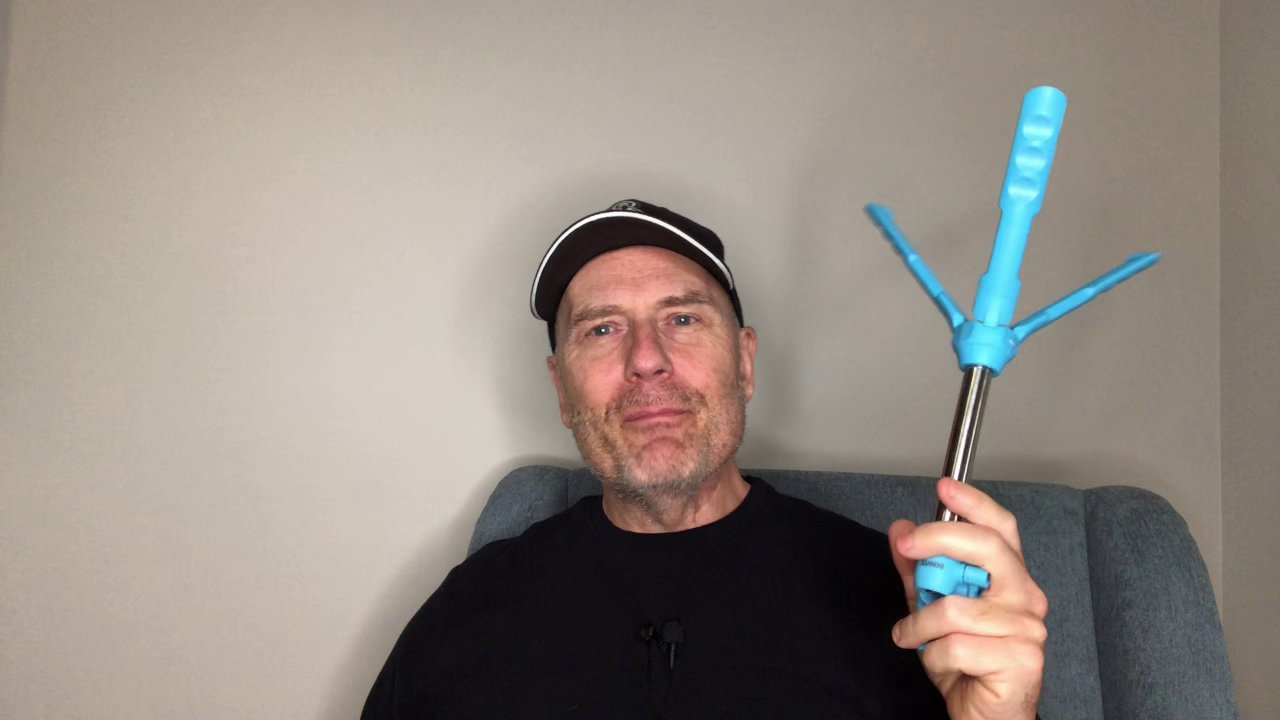
[0:49:12] Uh religious morality is also just a preference it is god's preference now saying so if you if you take let's say i take my my preference here let's right uh yeah i got a little garbage can here right let's say i take my preference now let's let's do something else here let's do um, here's here's my my tripod right this is i i tried using this but it wasn't tall enough so um so here's my tripod right so if i say human preferences are not a valid basis for morality, But I'm going to take the preference of my tripod that is all-knowing, all-powerful, and cannot be wrong, and that preference escapes the problem of human preference being subjective.
[0:50:07] Have I solved the problem? I have not solved the problem. I've simply created a fantasy object whose preference is not preference but somehow superior to physics. So what I've done is I've created a little tripod here, right? And I've said, the preference of this tripod is absolute and universal, right? Well, I haven't done anything. I've created a magical being whose preferences are objective and universal.
[0:50:35] In other words, I've created, I said, well, the problem with preference is that it's subjective and it resides within the consciousness. And then I say, well, no, no, no, I've created a super consciousness for which preference is universal, absolute, and perfect. and it's like, nope, I haven't solved the problem. I've just created a magical entity that solves the problem of preference being subjective by claiming that this magical entity is somehow universal. I have created a magical being that solves, quote, solves the problem by taking on the opposite property. So all preferences are subjective, let's say all preferences are subjective, but I've created a super consciousness whose preferences are not subjective that's just a magical slate of hand right it's like that famous cartoon if somebody's uh got a bunch of equations on one side a bunch of a and the solution on the other side in the middle there's a cloud and it says here a miracle occurs and the supervisor is saying you might want to break that part in the middle out a bit here right so i don't get to create magical entities right if i say well um.
[0:51:42] I am always subject to error. I can make things, I can make statements that are false or anti-rational or inconsistent or contradict the facts, right? Reason and evidence. I can be at fault. All consciousness can be at fault. But this tripod, you see, see, Father, Son, Holy Ghost. We've got a tripod here, right? A trinity, right? A trinity, a one, right? Trinity of one. So, God, Father, Son, Holy Ghost. So, I've got a trinity here that can't ever make mistakes. So all consciousness is subject to error but I've got a trinity here that is not subject to error and I just listened to that. I haven't solved the problem I've just created a magical entity with the opposite.
[0:52:26] Properties of actual consciousness and said, it's infallible. No, I am totally fallible. But don't worry, because I have an invisible friend who's infallible, and I just have to obey my invisible friend. Oh, by the way, you can't talk to my invisible friend. You can only talk to me. I'll go ask the invisible friend. It's a con. It's a con. And saying, well, morality is subjective.
[0:52:51] But I have created a magical entity for whom morality is not subjective. It's like, that's not an answer.
[0:53:01] That's not an answer. I mean, can you imagine in a math test?
[0:53:06] You say two and two make five and you get marked out. I say, no, that's wrong. Two and two make four. And you say, no, no, no, no. No, I have an invisible friend for whom two and two make five. And he cannot be wrong and he told me that therefore two and two make five I mean you would be laughed out of the math class actually probably be medicated these days because they jam SSRIs into your eyeballs with the claws of a dove or something like that so you don't solve the problem of morality by creating a fictional entity that is perfect that gives you moral commandments that can't be disobeyed and that's somehow true nope then so philosophically I mean if you're into theology maybe you think you've solved the problem. But if you don't know why the earth moves, you say, I don't know why the earth moves. If you say the earth moves because there are godlike invisible horses that are pushing it continually, have you solved the problem? No. You have just created impossible entities and pretended to solve the problem, right? There used to be an old story that the sun was being pulled by a god in a chariot and it's like you've got the illusion of an answer you don't have a real answer and religion has prevented the rise of philosophical morality as in universally preferable behavior of UPB because it's a pretend answer.
[0:54:32] So, where do you get morality without God presupposes that you get morality with God, which presupposes that God exists, that God is perfect, that God communicates to humans, that these commandments are valid, and none of that is true. None of that is proven. There's no proof of the existence of God. There's no proof that God somehow escapes the problem of subjectivity, and so on. So, if you say, your morality that is reasoned out from first principles and perfectly consistent and aligns with all reason and evidence in history that your morality is subjective, but my morality is not subjective because I have created in my mind an imaginary entity for which morality is not subjective and I'm just obeying that. It's not an answer. Not an answer. It's not an argument. It is a fantasy. So, I mean, that would be one approach that I would take and we can talk about
[0:55:28] others if you're interested. Thank you so much, my friends. freedomain.com/donate to help out the show you know how great it is how many thousands of hours I've saved you by being commercial free that comes at a price that comes at a cost everything I do here costs money freedomain.com/donate to help out the show lots of love I'll talk to you soon bye.
Support the show, using a variety of donation methods
Support the show